






Introduction
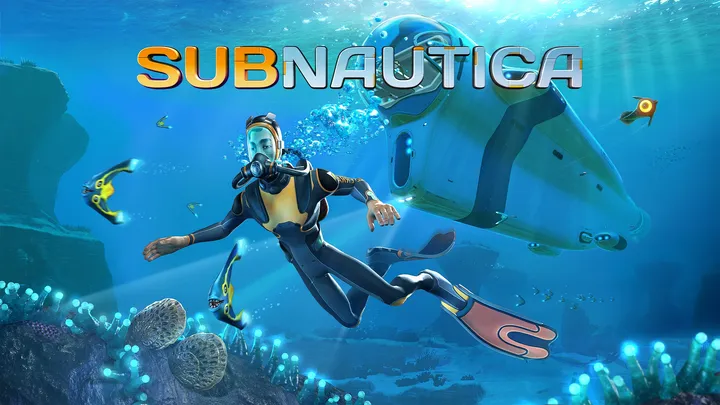
Most survival games create tension through combat, aggressive enemies, or limited resources. Subnautica approaches fear from an entirely different direction. Instead of relying on constant violence, the game transforms the ocean itself into a psychological structure. Water becomes more than an environment. It becomes a system that controls emotion, perception, movement, and vulnerability.
What makes Subnautica unique is the way it creates fear without always presenting immediate danger. The player often feels terrified long before encountering an actual threat. Darkness, distance, sound, and depth slowly manipulate the player’s imagination. The result is an experience where anxiety becomes continuous even during peaceful exploration.
The brilliance of the game lies in its environmental design. Every biome, sound effect, lighting condition, and navigation challenge contributes to a carefully engineered emotional experience. Rather than functioning as a traditional horror game, Subnautica creates a form of environmental horror where the world itself becomes psychologically oppressive.
This article explores how Subnautica constructs fear through atmosphere, environmental architecture, and emotional conditioning instead of traditional horror mechanics. Rather than focusing on gameplay tips or survival guides, the discussion examines the deeper design philosophy behind one of the most psychologically immersive survival games ever created.
The Ocean as an Emotional System
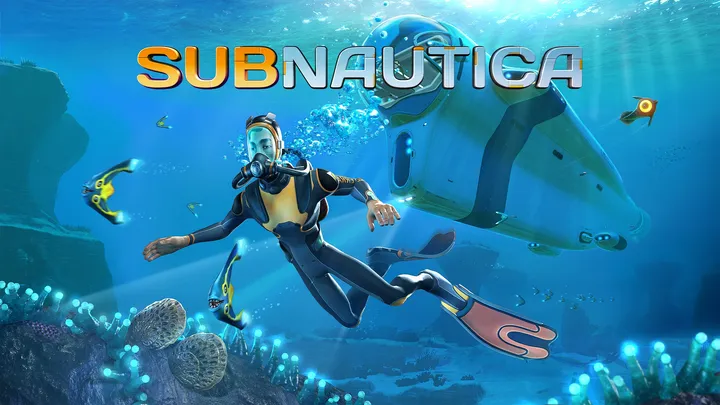
The ocean in Subnautica is not simply a map for exploration. It behaves like an emotional engine that constantly changes the player’s psychological state. Most open-world games encourage freedom and empowerment, but Subnautica deliberately removes stability. The player enters an environment where normal human instincts no longer function properly.
On land, humans naturally understand movement and spatial awareness. Players instinctively know how to navigate environments with roads, walls, buildings, and visible horizons. Underwater spaces erase these expectations. There is no stable floor, no predictable visibility, and no guaranteed sense of direction. Threats can emerge from above, below, or behind at any moment.
This constant uncertainty creates emotional vulnerability. The player feels exposed even when no danger exists. Water distorts distance perception, limits visibility, and slows movement. These elements combine to create a persistent sense of helplessness.
Why Water Changes Player Psychology
Loss of Orientation
Players cannot rely on traditional navigation instincts underwater. Vertical movement creates confusion because there is no fixed reference point.
Environmental Exposure
Unlike enclosed indoor horror games, the ocean is overwhelmingly open. Ironically, this openness creates fear because there is nowhere to hide.
Sensory Distortion
Water affects sound, visibility, and movement simultaneously. Every action feels uncertain compared to movement on land.
The game understands that fear becomes stronger when the environment itself feels fundamentally unnatural to human perception.
The Psychological Importance of Visibility
Visibility is one of the most powerful emotional tools in Subnautica. Instead of using darkness aggressively from the beginning, the game slowly trains the player to fear reduced visibility over time.
Early areas are bright and colorful. Coral reefs glow with vibrant marine life. Small fish swim peacefully through illuminated water. These opening regions establish emotional comfort. The player begins associating the ocean with beauty and curiosity instead of danger.
Once that trust has been established, the game gradually introduces darker and deeper biomes. Visibility begins shrinking. Sunlight disappears. Water becomes cloudy and dense. Shadows become difficult to interpret.
The critical detail is that darkness rarely hides immediate attacks. Instead, darkness creates uncertainty about potential threats. The player’s imagination becomes more dangerous than actual enemy encounters.
Emotional Effects of Limited Visibility
- Increased paranoia
- Slower movement decisions
- Greater sensitivity to sound
- Fear of unseen creatures
- Constant anticipation of danger
Subnautica understands that uncertainty creates stronger psychological tension than direct confrontation.
Sound Design and Invisible Terror
The sound design in Subnautica is one of the most sophisticated examples of audio-based fear in gaming. The game constantly manipulates distance perception through underwater acoustics. Players hear creatures long before they see them.
This creates anticipatory fear, which is psychologically stronger than sudden shock. A distant Leviathan roar immediately changes player behavior even when no enemy is visible. Movement becomes cautious. Exploration slows. Anxiety rises automatically.
The game also uses silence carefully. Long stretches of quiet water create emotional discomfort because players begin expecting danger. Sudden sound after silence becomes significantly more powerful.
Mechanical noises contribute to this tension as well. Submarines creak under pressure. Engines hum through empty darkness. Equipment sounds echo through water in unnatural ways.
Why Audio Creates Stronger Fear
Imagination Completes the Threat
When players cannot see danger, the brain creates possibilities that often feel worse than reality.
Delayed Confirmation
Hearing something before seeing it extends tension over a longer period.
Environmental Ambiguity
Water distorts sound direction, making it difficult to determine whether danger is near or far.
Subnautica transforms sound into a survival mechanic rather than simple atmosphere.
Depth as Psychological Descent
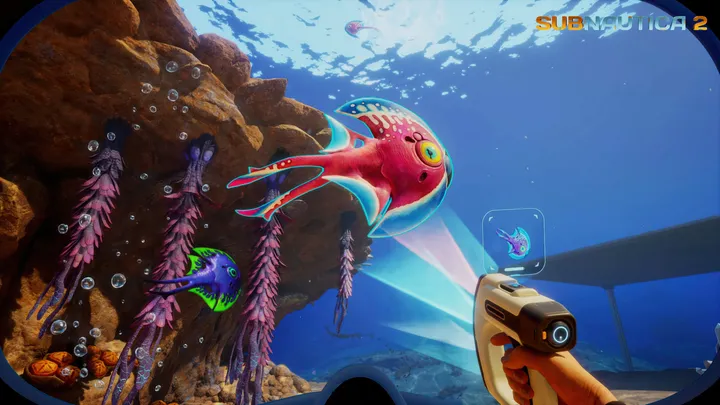
Depth in Subnautica represents more than gameplay progression. Descending deeper into the ocean becomes an emotional journey into alienation and uncertainty.
The surface world feels relatively safe. Sunlight remains visible. Colors are vibrant. Life appears familiar and manageable. As the player descends, those comforting visual signals disappear.
Deep environments feel hostile because they reject human familiarity. Light fades completely. Terrain becomes strange and unnatural. Massive creatures replace small marine life. The deeper the player travels, the more emotionally disconnected they become from safety.
This progression mirrors primal human fears associated with deep water. Humans evolved for terrestrial environments, not infinite underwater voids. The game exploits this instinctive discomfort brilliantly.
Emotional Meaning of Depth
- Surface areas symbolize stability
- Mid-depth zones create caution
- Deep trenches generate helplessness
- Lava regions feel completely alien
The game never needs scripted horror sequences because vertical descent itself becomes emotionally terrifying.
Isolation Without Human Civilization
One of the most powerful emotional choices in Subnautica is the near-total absence of living human interaction. The player exists almost entirely alone.
Many survival games include settlements, factions, companions, or active communication systems. Subnautica removes these comforts intentionally. Every discovered message comes from someone already dead, missing, or unreachable.
This creates existential isolation rather than temporary loneliness. The player realizes there is no functioning society anywhere nearby. Rescue feels uncertain for most of the experience.
The environment reinforces this emotional state constantly. Empty escape pods drift silently through the ocean. Abandoned research stations decay underwater. Destroyed structures suggest failed attempts at survival.
Methods the Game Uses to Reinforce Isolation
Environmental Storytelling
Ruined facilities and wreckage imply collapse and abandonment.
Narrative Design
Recorded messages consistently end in tragedy or disappearance.
Gameplay Structure
The player must gather resources, build shelters, and survive entirely alone.
The emotional result is not simply loneliness. It is the terrifying awareness that survival depends entirely on personal adaptation.
Leviathans and Controlled Fear Exposure
The Leviathans in Subnautica are memorable because the game controls exposure to them carefully. Many horror games reduce fear through repetition. Once enemies become predictable, they transform into mechanical obstacles instead of emotional threats.
Subnautica avoids this problem by limiting direct encounters. Large predators are often introduced through indirect methods before the player sees them clearly.
Players hear terrifying roars echoing through darkness. Shadows move beneath distant water. Massive silhouettes appear briefly before disappearing again.
This gradual introduction builds anticipation more effectively than constant attacks.
Why Leviathans Feel Terrifying
Massive Scale
The creatures are enormously larger than the player and their vehicles.
Environmental Context
Dark water and poor visibility exaggerate creature size psychologically.
Limited Exposure
Rare encounters prevent players from becoming emotionally desensitized.
Sudden Movement
Leviathans move with unsettling speed compared to their size.
The fear comes not just from danger, but from the feeling that humans do not belong in these environments.
Technology as Temporary Safety
Technology in Subnautica functions differently than in most science-fiction games. Instead of creating dominance, it creates fragile emotional security.
Vehicles like the Seamoth and Cyclops feel important because they provide temporary protection against the hostile environment. Inside a vehicle, players feel safer, warmer, and more controlled.
However, this safety is intentionally unstable. Vehicles can be damaged, destroyed, or stranded in dangerous zones. When systems fail underwater, panic immediately replaces comfort.
The emotional attachment players develop toward their submarines is surprisingly strong. These machines become psychological shelters rather than simple gameplay tools.
Why Vehicles Matter Emotionally
- They restore movement confidence
- They create personal safe spaces
- They reduce environmental vulnerability
- They separate players from open water
When a vehicle suddenly takes damage in deep darkness, the emotional reaction feels genuine because protection itself becomes fragile.
Environmental Storytelling Through Ruins
Subnautica rarely explains its narrative directly. Instead, it uses environmental storytelling to communicate history, failure, and mystery.
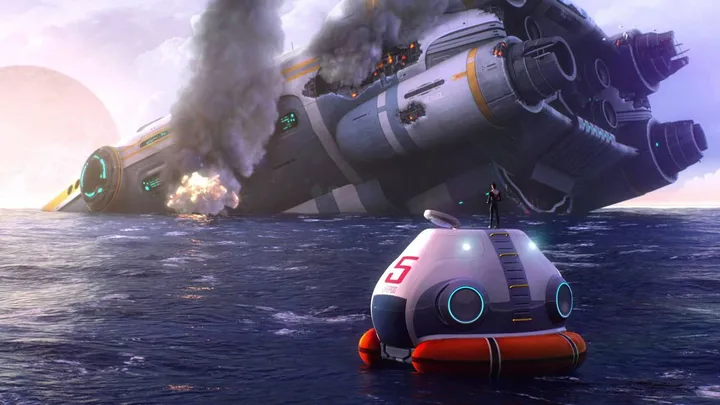
The wreckage of the Aurora is one of the game’s strongest visual symbols. The massive crashed ship dominates the environment as a reminder of technological collapse. Humanity arrived with advanced equipment and still failed against the planet.
Alien structures deepen this mystery further. Their architecture feels ancient and emotionally cold. Players encounter evidence of intelligence without fully understanding its intentions.
The world feels historically layered because every biome contains traces of previous events.
Environmental Storytelling Elements
Human Remains
- Destroyed escape pods
- Damaged laboratories
- Abandoned shelters
Alien Infrastructure
- Ancient facilities
- Energy systems
- Quarantine installations
Ecological Clues
- Infected creatures
- Dead ecosystems
- Biological mutations
The story emerges naturally through exploration rather than exposition-heavy dialogue.
Fear Without Constant Combat
One of Subnautica’s greatest achievements is maintaining fear without relying heavily on combat systems. Many horror games eventually evolve into action games because players gain enough weapons to overpower threats.
Subnautica deliberately avoids this transformation. Players can defend themselves in limited ways, but they rarely feel completely dominant over the environment.
This preserves vulnerability throughout the experience. Even late in the game, entering deep unknown territory still feels dangerous.
The pacing is equally important. Long peaceful exploration sequences allow tension to rebuild naturally. If horror remains constant, players become emotionally numb. Subnautica alternates beauty and terror carefully.
Emotional Rhythm of Exploration
- Curiosity
- Discovery
- Unease
- Fear
- Escape
- Temporary relief
- Renewed tension
This cyclical emotional structure keeps the experience psychologically engaging for dozens of hours.

Transformation Through Adaptation
By the end of Subnautica, the player’s emotional relationship with the ocean changes completely. Areas that once felt terrifying eventually become familiar.
This transformation is central to the game’s thematic identity. The player does not conquer the planet through violence or domination. Instead, survival depends on adaptation and emotional resilience.
The ocean remains dangerous throughout the game, but it stops feeling incomprehensible. Fear evolves into understanding.
This emotional progression creates a unique form of character development. The player’s greatest advancement is psychological confidence rather than combat strength.
Emotional Evolution Across the Game
Early Experience
- Fear of darkness
- Panic during exploration
- Constant uncertainty
- Extreme caution
Late Experience
- Controlled navigation
- Familiarity with danger
- Emotional resilience
- Acceptance of risk
The game ultimately becomes a story about adaptation to an indifferent environment rather than victory over it.
Why Subnautica Changed Survival Horror
Subnautica demonstrated that horror games do not need traditional horror structures to create fear. The game avoids haunted houses, scripted jump scares, and nonstop violence.
Instead, it creates environmental horror through atmosphere, sound, scale, and isolation. Every mechanic supports the same emotional objective: making the player feel small inside a vast and indifferent ecosystem.
One of the game’s most remarkable achievements is combining beauty with terror. Many locations are visually breathtaking while simultaneously emotionally intimidating. Players feel compelled to continue exploring despite overwhelming anxiety.
This contradiction creates a uniquely immersive experience rarely replicated in survival games.
Lasting Influence on Game Design
- Greater emphasis on environmental storytelling
- Increased use of psychological tension
- Reduced dependence on combat systems
- Stronger atmospheric sound design
- Focus on vulnerability instead of empowerment
Subnautica remains influential because it understands that fear becomes most powerful when it emerges naturally from the environment itself.
Conclusion
Subnautica is one of the most psychologically sophisticated survival games ever created because it transforms the environment into an emotional system. Fear does not come primarily from enemies or scripted horror sequences. Instead, terror emerges from uncertainty, depth, isolation, and the overwhelming scale of the ocean.
The game manipulates visibility, sound, and environmental architecture to create continuous psychological tension. Every descent into deeper water becomes both physical exploration and emotional confrontation. Players gradually learn that survival depends as much on psychological adaptation as resource management.
What makes Subnautica extraordinary is its ability to make the ocean feel simultaneously beautiful and terrifying. The world invites exploration while constantly reminding players of their vulnerability. This emotional contradiction creates a uniquely immersive atmosphere that few games have matched.
By the end of the experience, the player has not simply survived an alien planet. They have psychologically adapted to an environment that once felt impossible to understand. That transformation is the true core of Subnautica’s design philosophy and the reason the game remains one of the most memorable environmental horror experiences in modern gaming.